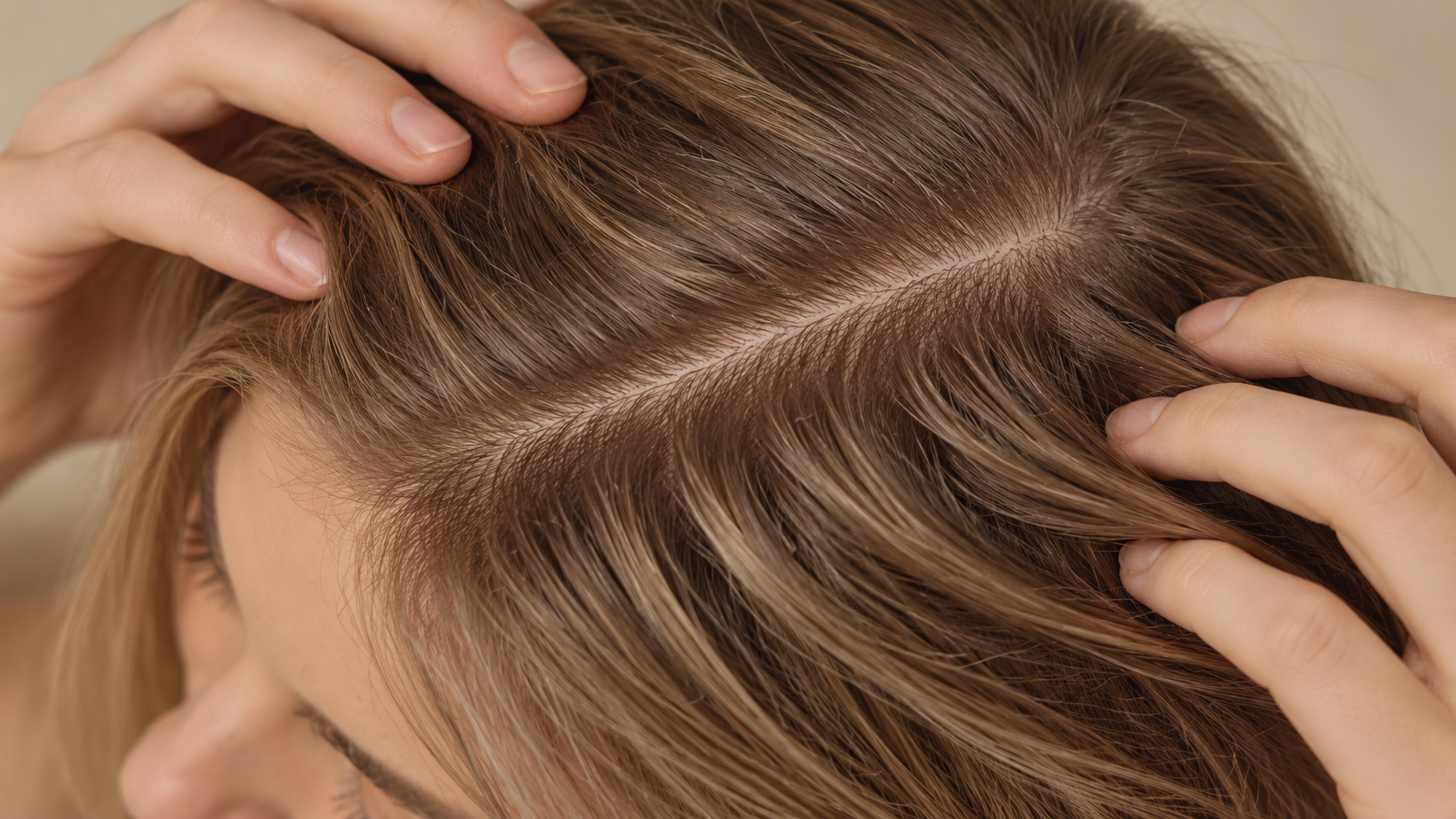
Flaking on the shoulders, itching or roots that seem to become oily too quickly can easily lead us to simply call the problem “dandruff”. However, dandruff does not always look the same. Some people notice small white flakes that come away easily, while in others the flakes are more adherent and appear alongside a noticeably oily scalp.
Recognising these differences can help you choose more appropriate cleansing habits and care products. However, it is important to remember that dry dandruff and oily dandruff are practical descriptions rather than separate dermatological diagnoses. Persistent flaking can have different causes, and when inflammation, plaques, pain or severe symptoms appear, seeking medical advice is recommended.
What is dandruff? Dandruff is visible flaking of the scalp. It may appear as small, dry flakes or as more oily and adherent scales. Factors such as dryness, excess sebum, irritation, the skin barrier and interactions with microorganisms naturally present on the scalp may all play a role.
How can you tell dry dandruff from oily dandruff?
The most useful distinction is not simply the amount of flaking, but its appearance, how firmly it adheres and the overall condition of the scalp. There is no absolute dividing line, and both patterns can overlap.
Dry dandruff profile
It is commonly associated with fine, whitish and relatively loose flakes that detach easily and may become visible on the hair or clothing.
- Small, lightweight flakes.
- Less noticeable oiliness at the roots.
- May coexist with tightness or sensitivity.
- Cold weather, dry environments or certain products may increase the sensation of dryness.
It is also important to remember that not all dry flaking is necessarily dandruff: a dehydrated or sensitised scalp can produce a similar appearance.
Oily dandruff profile
The flakes tend to be larger, more adherent and sometimes yellowish. The roots may also appear shiny and become oily more quickly.
- Flakes that adhere more closely to the scalp.
- A whitish or yellowish appearance in some cases.
- Visible excess sebum at the roots.
- Itching or redness may be more noticeable.
When oily flaking is accompanied by inflammation, plaques or significant itching, seborrheic dermatitis may be involved. Diagnosis should be made by a healthcare professional.
Oiliness does not mean poor hygiene
An oily scalp is not the same as a “dirty” scalp. Sebum production depends on many individual factors. The purpose of cleansing is to remove excess sebum, flakes, sweat and residue appropriately, without resorting to aggressive rubbing that could increase irritation.
Why can scalp flaking appear?
Dandruff is multifactorial. Mayo Clinic lists both dry skin and irritated, oily skin among its possible causes, as well as sensitivity to certain hair care products. Dermatological sources also associate seborrheic dermatitis with sebaceous gland activity, changes in the skin barrier and interactions with Malassezia species, yeasts that normally form part of the skin microbiota.
For this reason, trying to correct all flaking simply by “removing oil” or, at the opposite extreme, applying very nourishing products directly to the roots may not address the scalp’s actual needs.
What care can help maintain a balanced scalp?
Rather than trying to remove every visible flake in a single wash, a consistent routine should aim to keep the scalp surface clean and comfortable while reducing factors that may contribute to irritation.
Wash as often as your scalp needs
There is no need to artificially extend the time between washes when oil, sweat or product residue is accumulating. Washing frequency should be adapted to the individual and to the way their scalp behaves.
Use lukewarm water
Avoid excessively hot water. Washing comfortably with lukewarm water and rinsing thoroughly helps remove the product properly without exposing the skin to unnecessary stress.
Massage rather than scratch
Distribute the shampoo with your fingertips using gentle movements. Fingernails, aggressive scalp brushes or attempts to forcibly remove flakes can increase irritation.
Look at the roots, not only the lengths
Your shampoo should primarily be chosen according to the needs of your scalp. Conditioners and masks can be focused on the mid-lengths and ends when the hair requires additional nourishment.
Clean Scalp: professional care when dandruff is the main concern
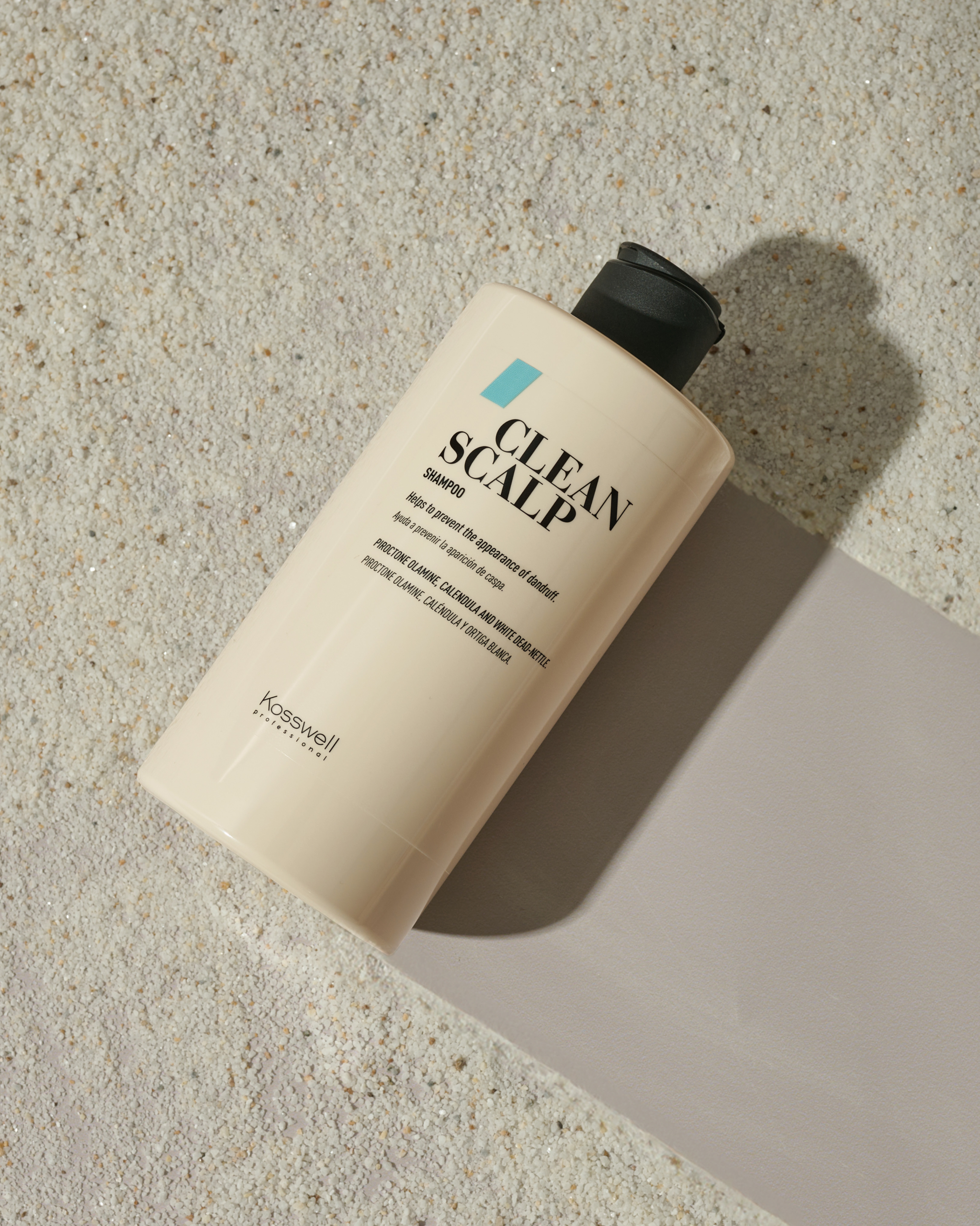
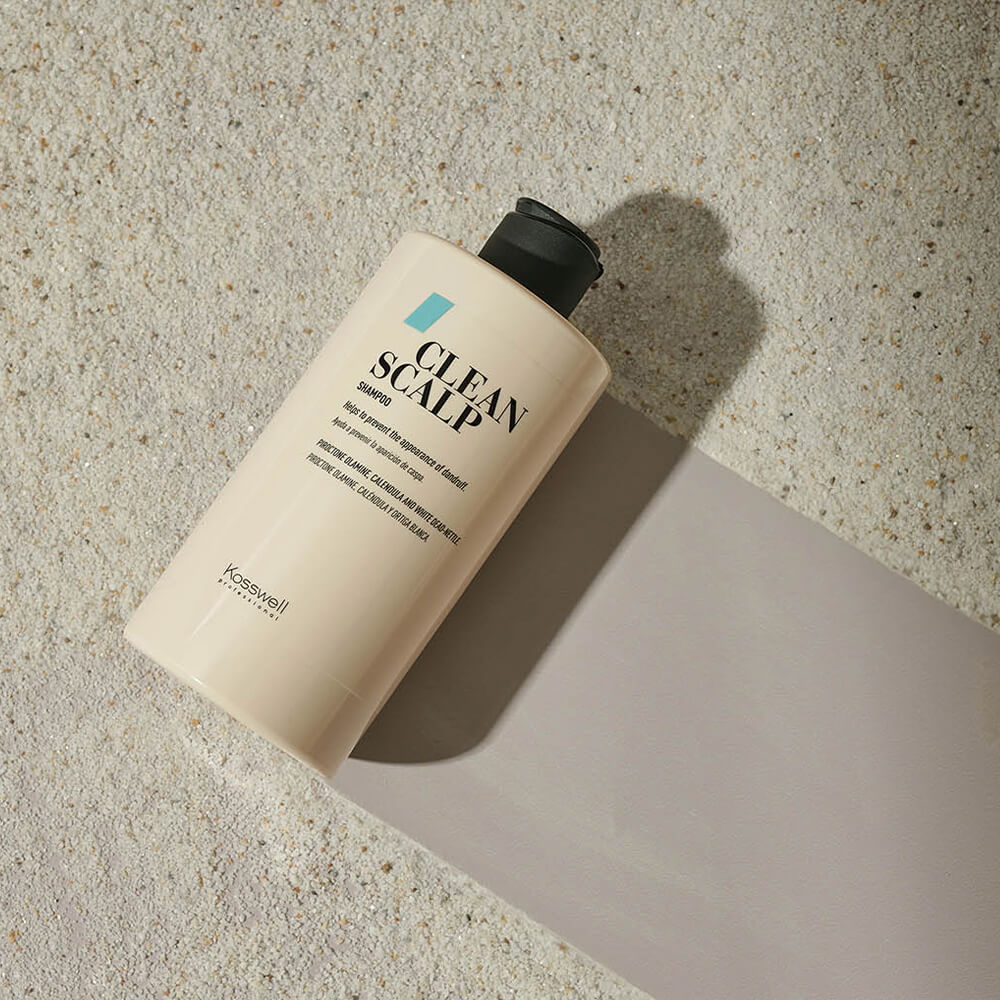
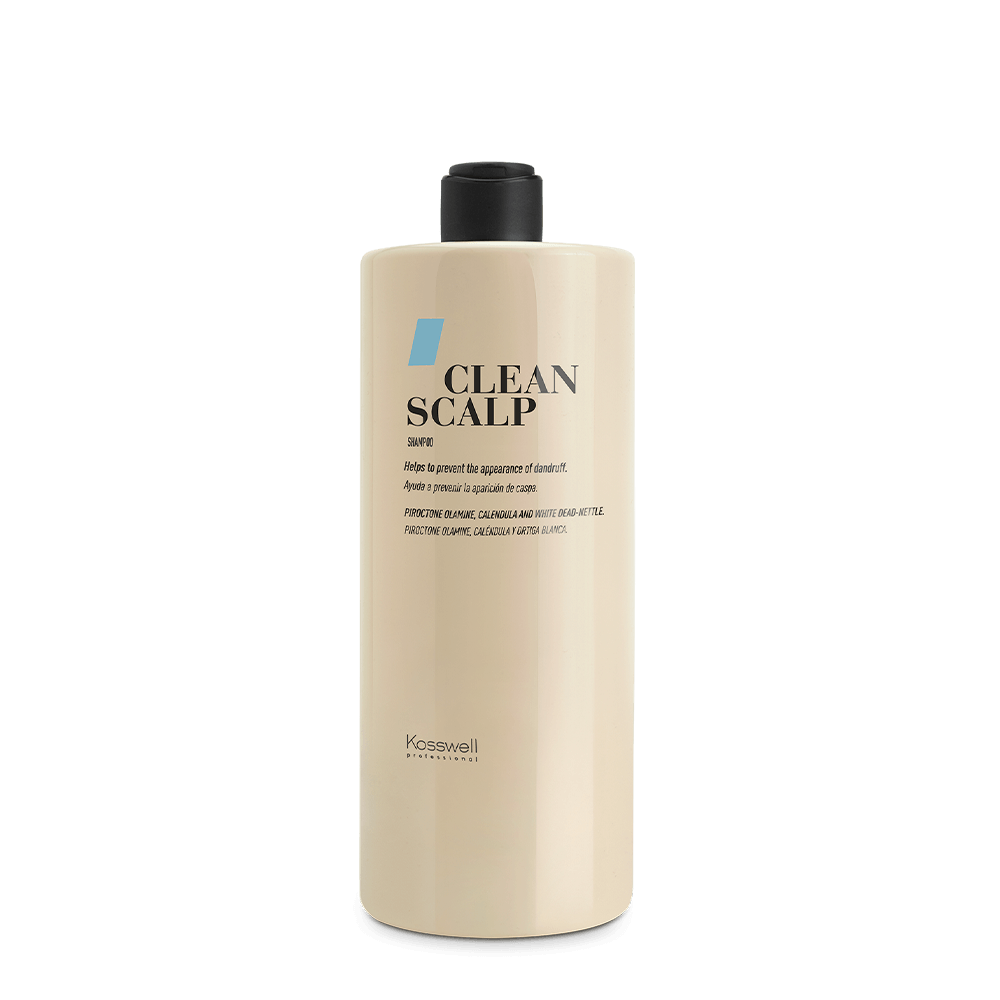
Within the Kosswell Professional Innove range, Clean Scalp is the shampoo specifically developed for dandruff-prone scalps.
Clean Scalp
Kosswell’s official product information highlights a combination of piroctone olamine, calendula extract, white nettle and provitamin B5. The brand formulates the product to help remove visible flaking while keeping the scalp clean and balanced.
These are cosmetic benefits declared by Kosswell Professional and should not be interpreted as medical treatment for a dermatological condition.
- Piroctone olamine: Kosswell attributes antimicrobial and dandruff-regulating action to this ingredient.
- Calendula: included by the brand to help soothe and protect the scalp.
- White nettle: used in the formula with a purifying and balancing approach.
- Provitamin B5: provides hydration and softness to the hair.
How should an anti-dandruff shampoo be used in your routine?
According to Kosswell’s current instructions, Clean Scalp should be applied to wet hair and gently massaged until a lather forms. Leave it on for a few minutes to enhance its action, then rinse thoroughly with plenty of water. Repeat the application if necessary.
The brand’s technical guidance also allows Clean Scalp to be alternated with Daily Shampoo, Kosswell’s frequent-use shampoo. This approach can be useful when combining targeted scalp care with gentle everyday cleansing.
What if the scalp is also very oily?
It is important not to automatically equate “oily hair” with “oily dandruff”. If excess sebum is the main concern without significant flaking, Kosswell offers Fit Balance, specifically formulated for oily scalp and hair. When visible flaking is the main concern, Clean Scalp is the product within the range specifically developed for dandruff.
When should you see a dermatologist?
Mild dandruff can often be managed with an appropriate routine, but persistent scalp flaking should not be self-diagnosed indefinitely. Medical assessment is recommended if the problem does not improve with usual care or if signs appear that could indicate a different condition.
- Marked redness or persistent inflammation.
- Intense itching, pain or a burning sensation.
- Thick crusts, sores, discharge or signs of infection.
- Clearly defined plaques or flaking that extends beyond the scalp.
- Sudden changes or symptoms that do not improve with usual anti-dandruff care.
Psoriasis, contact dermatitis, atopic dermatitis and seborrheic dermatitis can share some signs with dandruff. A professional assessment can help distinguish between them when the presentation is unclear.
For further information about the causes and signs of dandruff, see Mayo Clinic’s medical information on dandruff.
For information about oily flaking and seborrheic dermatitis, MedlinePlus explains its signs, causes and care options.
Frequently asked questions about dry and oily dandruff
Are dry dandruff and oily dandruff two different conditions?
Not necessarily. They are useful terms for describing the appearance of flaking and the condition of the scalp, but they do not represent two separate medical diagnoses on their own. Scalp flaking can appear dry or oily, and several different conditions can cause it.
How can I tell if I have dry dandruff?
Fine, pale flakes that detach easily from a scalp that does not appear particularly oily tend to fit the profile commonly described as dry dandruff. However, simple scalp dryness or irritation can produce similar signs.
What does oily dandruff usually look like?
It may appear as more adherent, white or yellowish flakes together with oily roots. If inflammation, intense itching or persistent plaques are also present, dermatological assessment is advisable to rule out seborrheic dermatitis or other conditions.
Does an oily scalp mean I should wash my hair less often?
No. Delaying washing does not necessarily correct sebum production. The appropriate frequency depends on the individual scalp and should allow oil, sweat, flakes and residue to be removed without causing unnecessary irritation.
Is Clean Scalp suitable for every type of scalp flaking?
Clean Scalp is the cosmetic shampoo that Kosswell Professional specifically formulates for dandruff. However, it does not replace a medical diagnosis when flaking is caused by psoriasis, severe dermatitis, an infection or another scalp condition.
Can Clean Scalp be alternated with another shampoo?
Yes. Kosswell’s technical guidance allows Clean Scalp to be alternated with Daily Shampoo, its frequent-use shampoo for all hair types.
A balanced scalp starts with understanding its signals
Distinguishing between a drier pattern of flaking and a more oily one can help guide scalp care, but the aim is not simply to label the scalp. What matters is observing how it behaves: the amount and appearance of flakes, sebum levels, itching, sensitivity and how it responds to the routine.
Regular, gentle and well-adapted cleansing, together with a targeted product when dandruff is present, can help restore a feeling of comfort and cleanliness. When symptoms are severe or persistent, dermatological assessment remains the appropriate step for identifying their cause.
Care for your scalp according to its real needs
Discover Clean Scalp and Kosswell Professional solutions designed to adapt your routine to the needs of your scalp and hair.