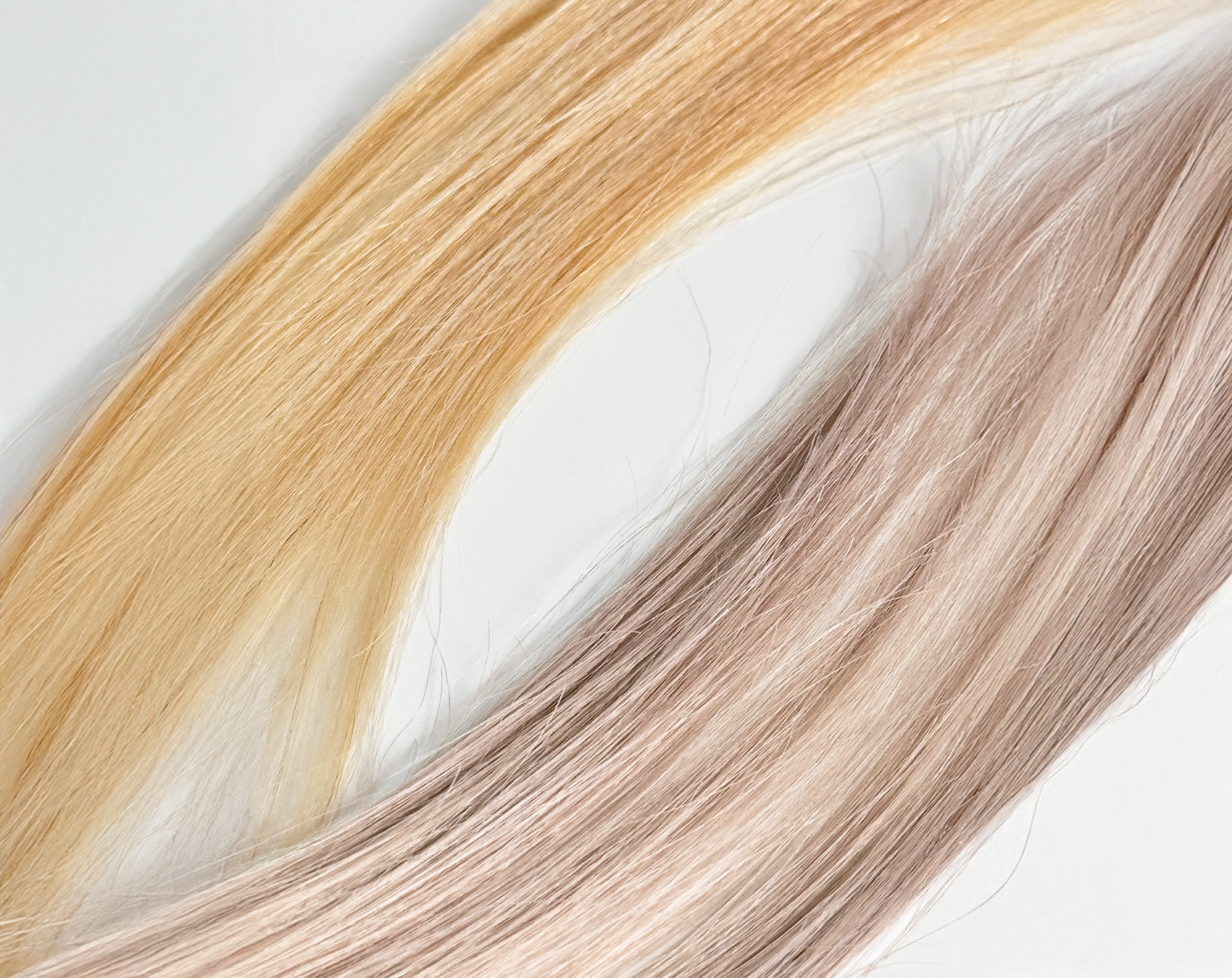
Blonde hair leaves the salon with the chosen tone. Over the following weeks, however, it may start to look warmer or more yellow. Understanding what has changed is the first step towards maintaining your shade without overloading the hair with pigment.
Why does blonde hair turn yellow? In bleached blonde hair, the underlying warmth left after lightening can become more visible as the toner fades. Environmental exposure and the condition of the hair fibre can also influence how the colour changes. This is why not every yellow tone needs the same correction.
The underlying pigment: yellow that was already there
Bleaching alters melanin, the hair’s natural pigment, through oxidation. This process reveals warm undertones that depend on the starting colour and the level of lightening achieved. Making hair lighter does not automatically produce a cool blonde.
A study on the effects of bleaching on hair structure describes both pigmentation changes and alterations to the fibre following excessive bleaching. This is one reason to assess the colour and the hair’s strength before lightening it further.
Toning adjusts the shade over that underlying base. As its effect fades, the yellow undertone can become more noticeable. The hair is not recovering the melanin removed during bleaching: it is revealing more clearly the underlying colour that remained.
What makes blonde hair change between salon visits?
Gradual toner fading
Washing and everyday wear can reduce the intensity of cosmetic toning. How long it lasts depends on the service performed, the care routine and the condition of the hair. There is no set number of washes that applies to every head of hair.
The condition of the hair fibre
Hair that has undergone repeated bleaching may differ in condition between the roots, mid-lengths and ends. This unevenness matters when toning: the same application can produce different results in areas with different levels of porosity.
If the ends look dull while other areas remain yellow, adding more pigment to the entire head of hair can make the imbalance more noticeable. It is worth assessing what each area needs.
Light and heat
Exposure can also alter hair colour. Studies on light, heat and colour changes in grey hair show that the outcome depends on the conditions and the initial shade. Although these findings cannot be applied directly to all bleached blonde hair, they help explain why blaming every colour change on the sun is too simplistic.

Before toning: is it yellow, golden or orange?
A golden blonde may be exactly the desired result. A tone is only unwanted when it differs from the agreed colour goal. The first professional decision is therefore to identify what needs correcting.
- Unwanted yellow tones: violet pigments can help counteract them.
- Orange tones: these require a different assessment of the underlying colour and the correction needed; a purple shampoo may not be enough.
- Dull, grey or violet areas: check for excessive toning before repeating the application.
Neutralising is not lightening. Purple shampoo uses pigments to change how the tone is perceived. It does not replace bleaching or turn every base colour into platinum blonde.
When can a purple shampoo like White Hair help?
Maintaining tone between salon services
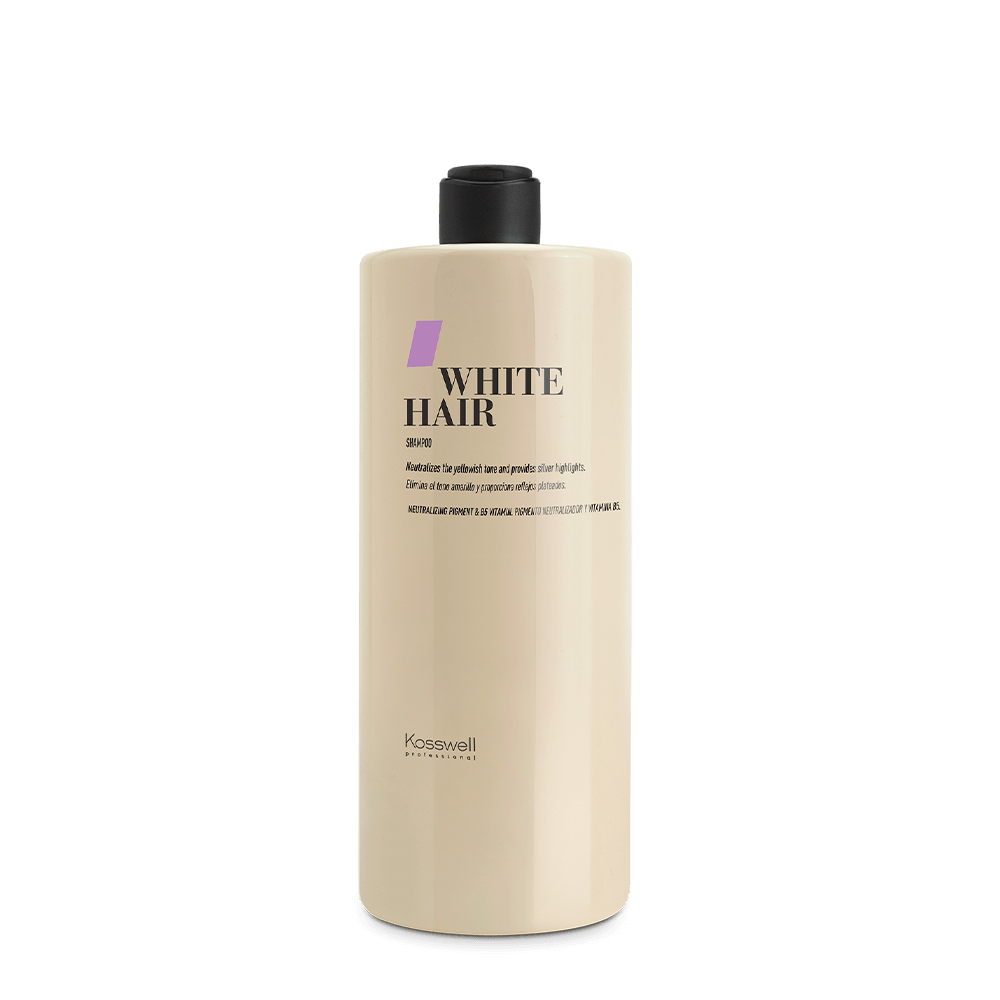
White Hair by Kosswell Professional is designed for white, grey and bleached blonde hair with yellowish tones. Its formula contains violet pigments to neutralise them and conditioning agents that promote softness and make combing easier.
It is a suitable option when the tone needs maintenance. If there is banding, significant colour variation or an underlying base that does not suit the desired result, the appropriate next step is a salon assessment.
How to use it
The official White Hair product information gives these instructions:
- Apply to wet hair.
- Massage gently to create a lather.
- Leave on for a few minutes.
- Rinse thoroughly with plenty of water.
The recommended frequency is once or twice a week, or as needed depending on the tone. For the precise processing time, follow the packaging instructions and your hairdresser’s advice: leaving it on longer on your own initiative does not guarantee a better result.
How to maintain blonde hair with a balanced routine
Care between appointments should address both the tone and the condition of the hair fibre. These general guidelines can help you plan your routine: