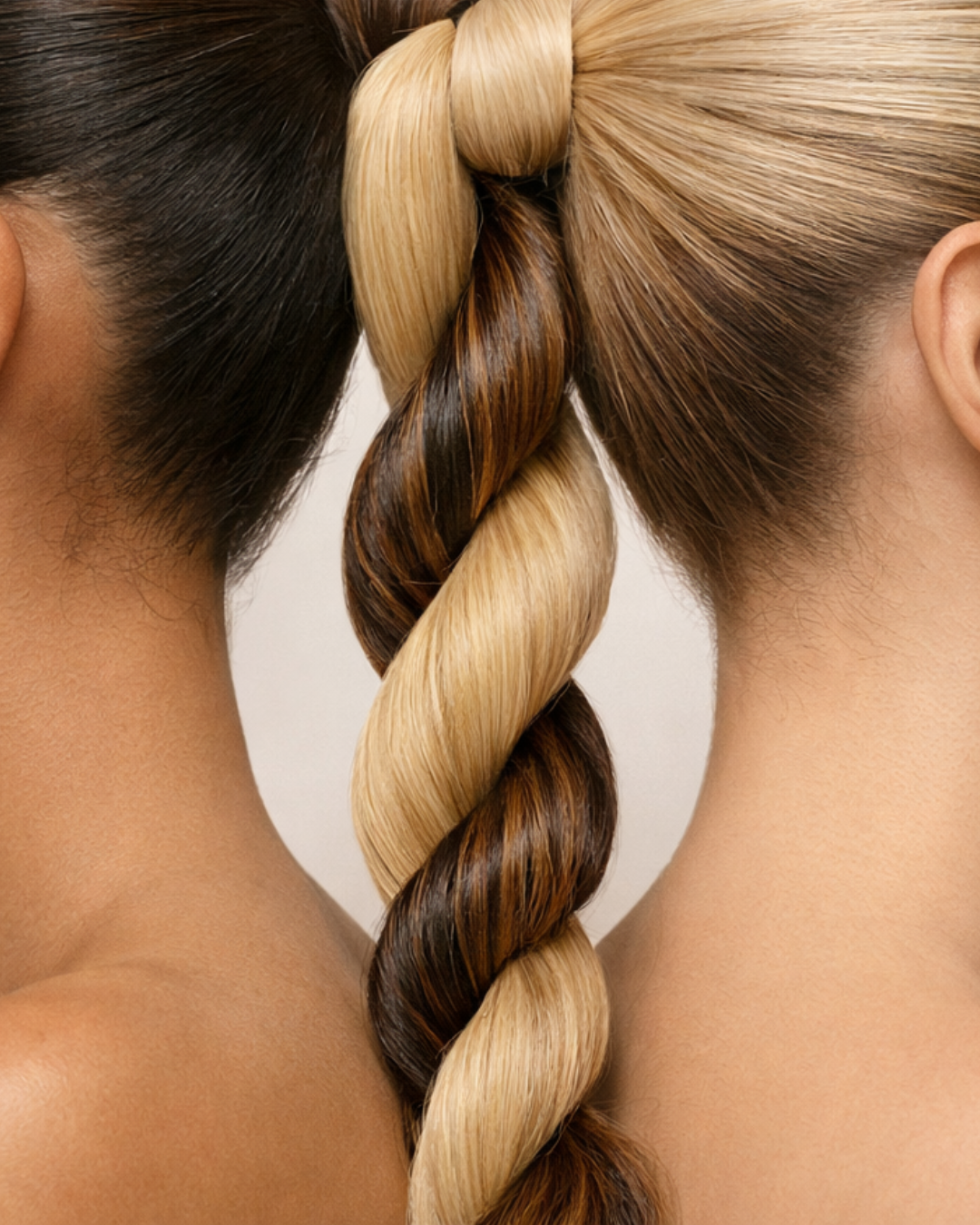
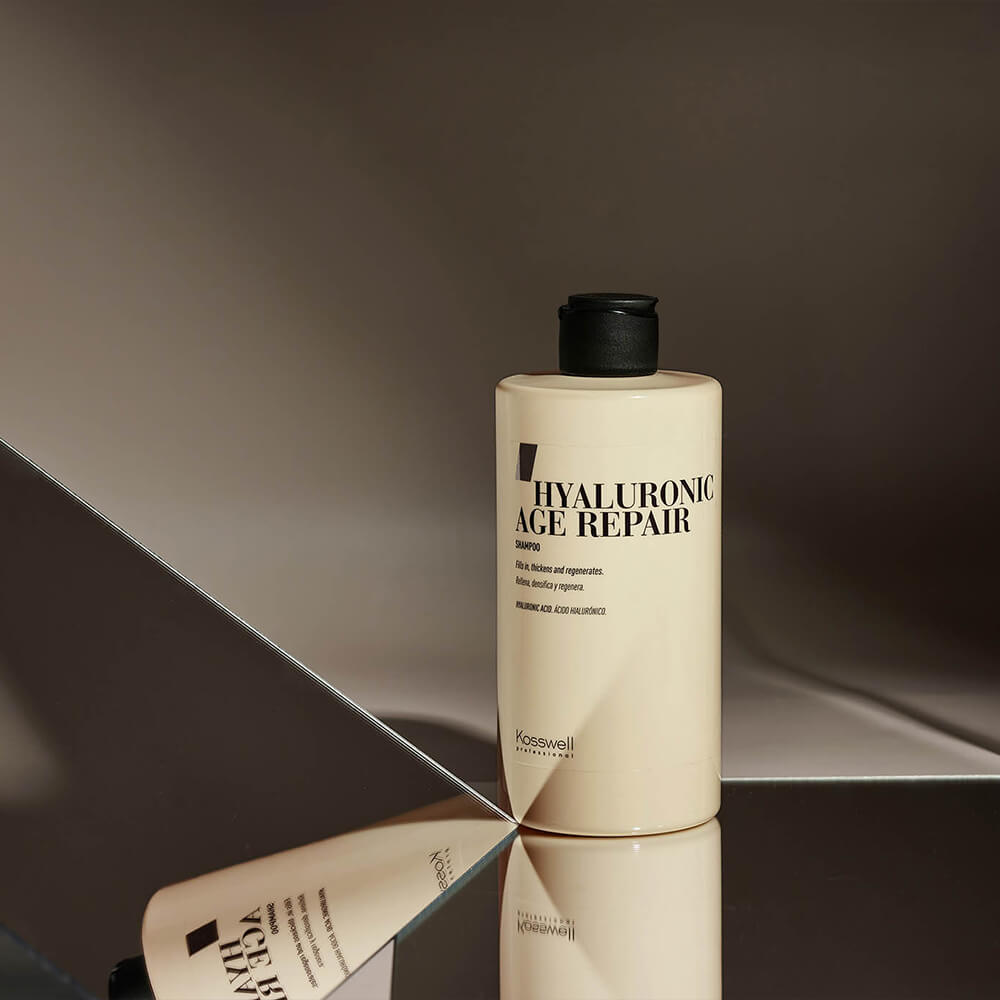
Hair also reflects the passage of time. It may become finer, drier, more fragile or duller, although these changes do not always appear in the same way or at the same age.
Understanding what happens to the hair fiber makes it possible to adapt the routine and give the hair what it needs at every stage: gentler cleansing, hydration, conditioning and greater protection against breakage.
When we talk about aging, we tend to think first about the skin. However, hair also evolves. Genetics, hormonal changes, oxidative stress and accumulated exposure to sunlight, heat or technical treatments can influence its appearance and resistance.
Dermatological research into hair aging explains that these changes affect both hair growth and the properties of the fiber. There is therefore no exact age at which all hair can be considered “mature”. It is a gradual process that develops differently in each person.
How does hair change over time?
Hair growth cycles change, and some follicles begin to produce finer fibers, which can make the hair appear less abundant.
The gradual reduction in diameter can make the hair more vulnerable to friction, brushing and chemical treatments.
A reduction in protective lipids can increase the sensation of dryness, roughness or stiffness.
A less even surface reflects light less effectively. As a result, the hair may look dull even when it is clean.
A finer, drier or altered fiber may be less resistant to styling, heat and external aggressors.
The reduction in melanin changes the color and can also alter the perception of the hair’s feel, texture and luminosity.
These signs should not necessarily be confused with a medical condition. However, sudden, intense or localized hair loss should be assessed by a healthcare professional, as it may have causes other than natural aging.
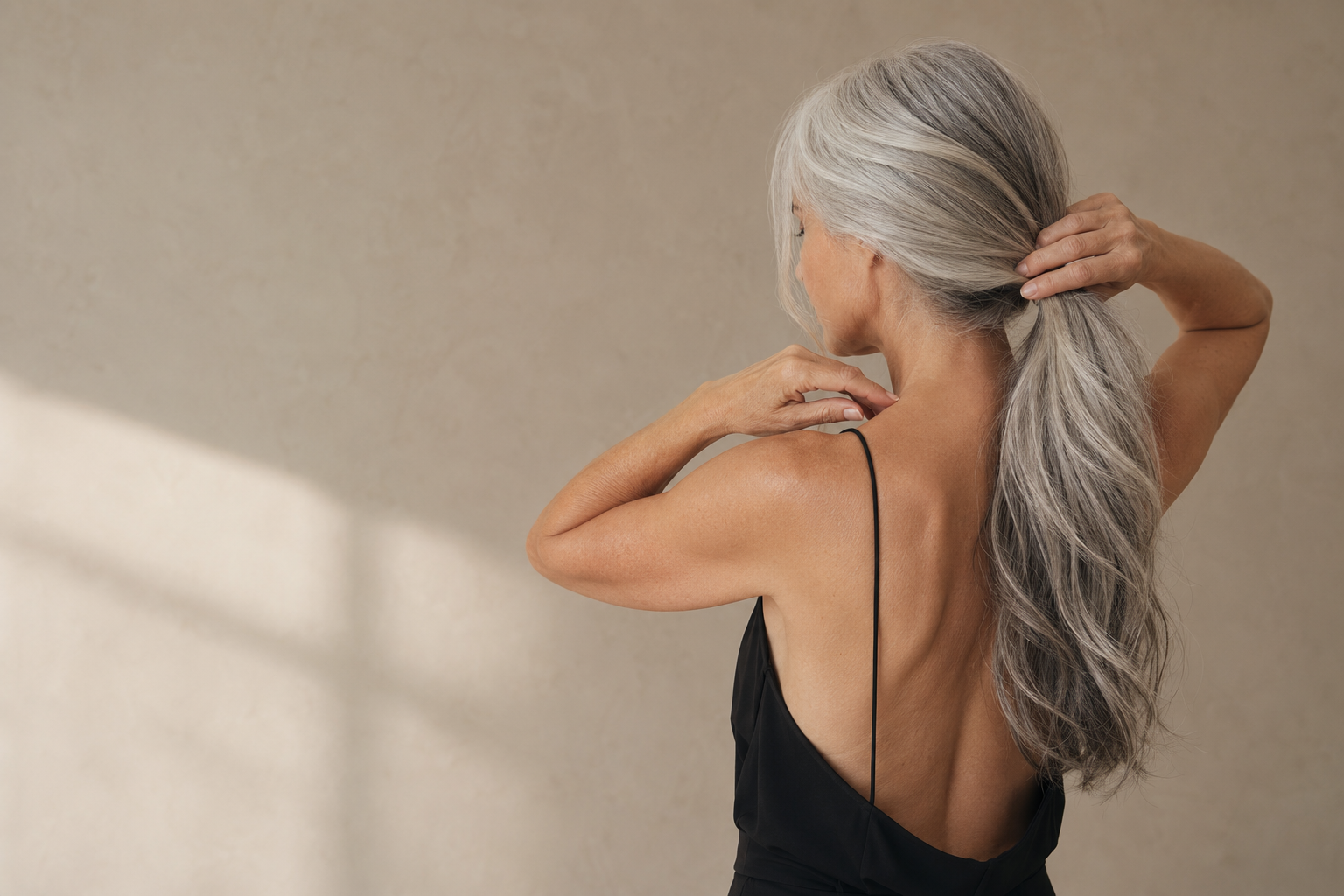
What does mature hair need?
The purpose of a cosmetic routine is not to stop the passage of time, but to respond to the needs that gradually appear. For dry, dull or weakened hair, priority should be given to formulas that cleanse gently and help improve the hydration, elasticity, softness and resistance of the fiber.
Gentle cleansing
Cleansing should remove dirt and product residue without increasing the sensation of dryness. It is also advisable to avoid excessively hot water and massage the scalp gently without aggressively rubbing the lengths.
Hydration and conditioning
When hair loses flexibility, friction during detangling increases. Adding hydrating and conditioning products to the routine helps improve the feel, manageability and appearance of the hair’s surface.
Protection against breakage
Finer hair requires gentler handling. Reducing pulling, choosing suitable tools, moderating the use of high temperatures and applying leave-in treatments can help preserve its cosmetic quality.
A professional routine for hair showing signs of aging
- Cleanse gently with a shampoo suited to dry, dull or weakened hair.
- Condition after washing to make detangling easier and improve the flexibility of the fiber.
- Avoid unnecessary friction when drying the hair. Gently press it with a towel instead of rubbing.
- Moderate the heat and use an appropriate temperature when drying and styling.
- Enhance the routine with complementary treatments such as Strong Night Repair overnight serum.
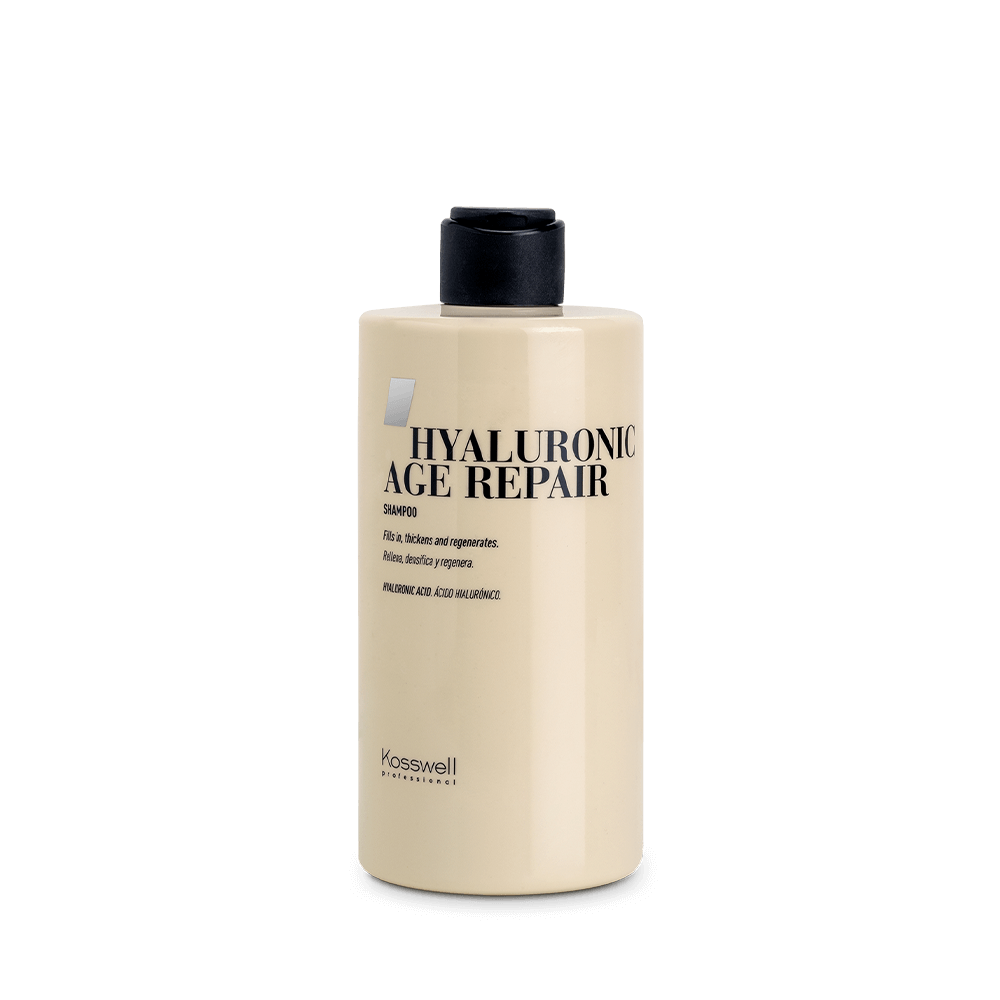
Hyaluronic Age Repair: the first step in an anti-aging routine
Hyaluronic Age Repair by Kosswell Professional is an anti-aging treatment shampoo created for dry, dull, weakened hair or hair showing signs of aging.
Its formula combines low molecular weight hyaluronic acid, plant stem cells and the strengthening Keratrix™ complex to provide gentle cleansing while helping improve the hydration, elasticity and resistance of the hair fiber.
- Provides gentle and nourishing cleansing.
- Helps improve hydration and elasticity.
- Helps strengthen the hair against breakage.
- Promotes a softer, shinier and revitalized appearance.
- Especially suitable for dry, dull or mature hair.
The role of hyaluronic acid in hair care
Hyaluronic acid is known for its ability to attract and retain water. When incorporated into a hair formula, it helps maintain hydration and promotes a greater sensation of flexibility and softness.
Hyaluronic Age Repair contains low molecular weight hyaluronic acid as part of a formula designed to improve the cosmetic signs associated with hair aging. It does not change the biological age of the hair, but it can help address visible needs such as dryness, loss of elasticity, fragility or a dull appearance.
To complete the routine, apply Hyaluronic Balsam Conditioner after washing. This acidic pH conditioner is formulated with hyaluronic acid, coconut oil and shea butter to help hydrate, soften and seal the cuticle.
How should Hyaluronic Age Repair be used?
Apply to wet hair and massage gently until a lather forms. Rinse thoroughly with water and repeat the application if necessary.
For a more complete routine, follow with a conditioner suited to the condition of the fiber and pay particular attention to detangling, drying and the use of heated tools. Consistency and gentle handling are just as important as choosing the right product.
Frequently asked questions about hair aging
At what age does hair aging begin?
There is no universal age. The first changes depend on genetics, hormones, lifestyle, environmental exposure and the hair’s history of technical treatments.
What are the most common signs?
The most common signs include grey hair, reduced density, a finer hair fiber, increased dryness, less shine, reduced elasticity and a greater tendency to break.
Can an anti-aging shampoo reverse hair aging?
It cannot reverse biological aging, but it can help improve associated cosmetic needs such as dehydration, lack of softness, fragility or a dull appearance.
What type of hair is Hyaluronic Age Repair suitable for?
It is especially suitable for dry, dull, weakened or mature hair that needs gentle cleansing together with hydration, elasticity, strength and shine.
Is hair aging the same as hair loss?
Not exactly. A reduction in density may form part of the process, but intense hair loss can also have hormonal, nutritional, medical or stress-related causes and should be assessed individually.
Caring for hair at every stage
Hair changes, but a carefully chosen routine can help it maintain its best possible appearance. Gentle cleansing, hydration, protection and consistency are key to preserving a more flexible, resistant and luminous hair fiber.
With Hyaluronic Age Repair, Kosswell Professional offers specific care designed to address the visible signs of hair aging from the very first step of the routine.
Request information