

Dryness, frizz, lack of shine and breakage may look like signs of the same problem, but they do not always require the same treatment. Choosing between hair hydration, nourishment or reconstruction means observing how the fibre behaves, which processes it has undergone and what result you want to achieve.
The distinction matters both in the salon and at home. A formula that is too lightweight may not be enough for severely damaged hair, while an excessively nourishing or repairing routine may reduce the movement of fine hair that only needs conditioning and hydration.
What are hair hydration, nourishment and reconstruction? They are three cosmetic priorities used to organise haircare. Hydration aims to improve flexibility and moisture levels; nourishment provides lipids and emollience; and reconstruction focuses on fibres weakened by chemical, thermal or mechanical damage. They are not medical diagnoses or completely separate categories.
What is the difference between hydration, nourishment and reconstruction?
Flexibility and a softer feel
Hydration is particularly useful when the hair feels rough, dull or inflexible but retains reasonable strength and does not show significant breakage.
- Dryness to the touch.
- Static electricity.
- Light frizz.
- Loss of movement.
Emollience, shine and control
In hair cosmetics, nourishment does not mean biologically feeding the hair. It means applying oils, butters and conditioning agents that help lubricate the surface and reduce its rough feel.
- Dry hair with persistent frizz.
- Stiff or tangled ends.
- Lack of shine.
- Thick or highly porous textures.
Cosmetic reinforcement of the fibre
Reconstruction is intended for hair weakened by bleaching, straightening, repeated colouring, intense heat or accumulated friction. Hydrolysed proteins and film-forming agents may temporarily improve its strength and uniformity.
- Frequent breakage.
- Severely weathered ends.
- Altered elasticity.
- Damage following technical services.
How can you tell which treatment your hair needs?
The most useful approach is to identify the predominant need rather than trying to place the entire head of hair into a single category. Hair may have balanced roots, dehydrated mid-lengths and damaged ends at the same time.
It is also important to distinguish the condition of the scalp from that of the hair fibre. Oily roots do not prevent the lengths from needing conditioning, just as dry ends do not justify applying a rich mask directly to the scalp.
Signs that can guide your choice
- Hydration is the priority when the hair looks dull or feels rough or static but retains body and does not break easily.
- Nourishment is the priority when it shows frizz, stiffness, tangling and a noticeable loss of shine or lubrication.
- Reconstruction is the priority when the hair breaks, feels highly sensitised or has lost strength after bleaching, straightening or repeated use of heated tools.

Can the same hair need all three types of care?
Yes. The three functions often overlap because hair formulas combine humectants, oils, butters, proteins, conditioning polymers and silicones. The important point is to decide which function should have the greatest weight and adjust the frequency according to how the hair responds.
Bleached hair, for example, may need reconstruction to improve its strength, hydration to recover flexibility and a moderate amount of nourishment to reduce friction and frizz. Fine hair without chemical damage, however, may respond better to a lightweight hydrating conditioner than to a very rich mask.
A practical approach to building your routine
- Cleanse without excessive friction. Work the shampoo mainly through the scalp and allow the lather to move through the lengths.
- Remove excess water. A saturated fibre makes it more difficult to distribute a mask or conditioner evenly.
- Apply from mid-lengths to ends. Always follow the processing time indicated on the product page.
- Observe the result. Greater softness and flexibility indicate a suitable choice. Stiffness, heaviness or reduced movement may point to excessive product or an unsuitable frequency.
- Protect against heat. Use a moderate temperature and avoid repeatedly passing the tool over the same section.
Which Kosswell treatment should you choose for each primary need?
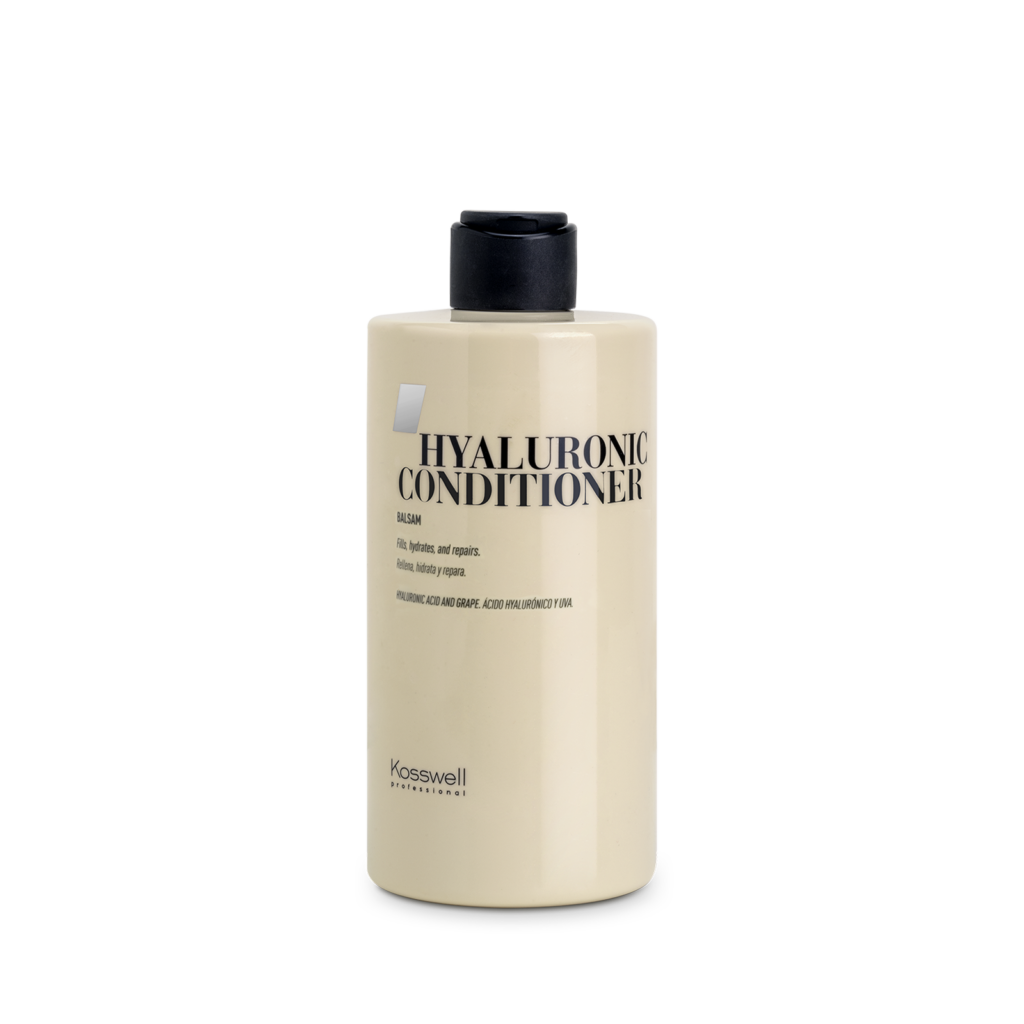
Hyaluronic Balsam Conditioner
This professional conditioner combines hyaluronic acid, coconut oil and shea butter. Its formula also contains glycerine, betaine and panthenol, cosmetic ingredients associated with conditioning, softness and moisture retention.
It is suitable for all hair types and is particularly appropriate when the hair feels dry, dull or inflexible but does not require an intensive repairing mask after every wash.
View Hyaluronic Balsam ConditionerFor dryness and reduced flexibility
Prioritise conditioners containing humectants and softening agents. Hyaluronic Balsam Conditioner makes it possible to include this type of care regularly without relying on an intensive mask after every wash.
View the conditionerMacadamia Reinforce Mask
Its formula includes macadamia oil, shea butter, panthenol and protein derivatives. It is intended for dry, frizzy or stressed hair that needs greater emollience, softness and control.
How to use: apply from mid-lengths to ends, leave on for five to ten minutes and rinse.
View Macadamia Reinforce MaskStructure Repair Instant
This leave-in treatment contains hydrolysed keratin, hydrolysed vegetable protein, panthenol and argan oil. It is intended for weakened, dry or chemically treated hair.
How to use: distribute through clean, damp hair from mid-lengths to ends. Do not rinse.
View Structure Repair Instant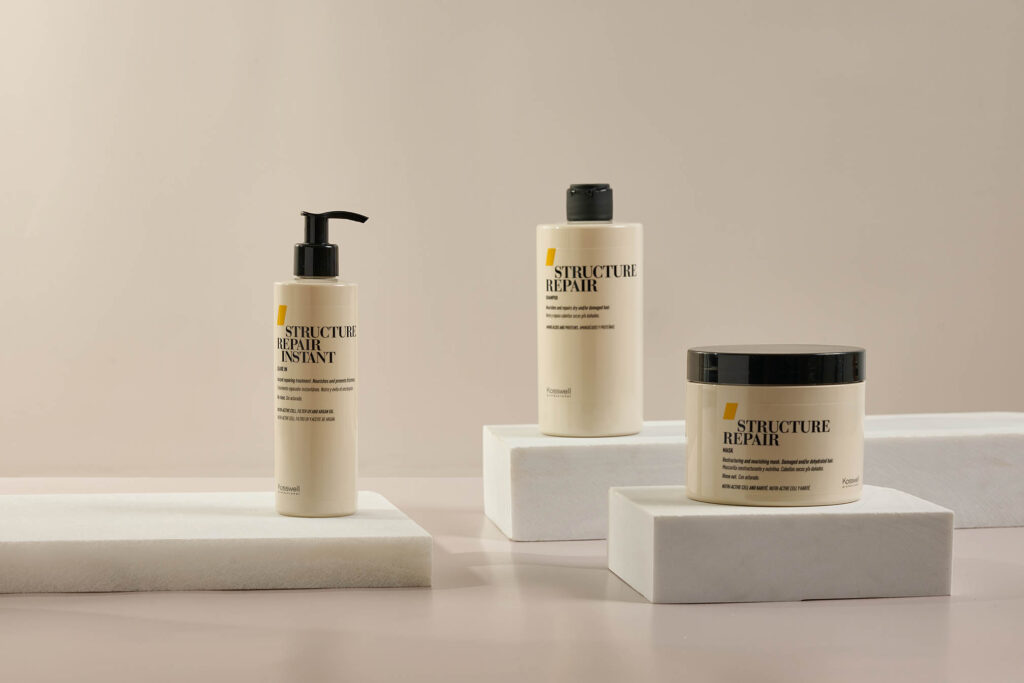
Professional note
The hair shaft is a keratinised fibre and cannot regenerate biologically like living tissue. Cosmetics can condition, coat, lubricate and temporarily reinforce its surface, but they cannot permanently rejoin split ends. When the damage is advanced, cutting the affected area remains part of the strategy.
Frequently asked questions
Does frizz always mean that the hair lacks hydration?
No. Frizz may be related to atmospheric humidity, porosity, friction, chemical damage, the hair’s natural shape or insufficient lipid conditioning. It is also important to consider its feel, shine, strength and previous technical treatments.
How often should a hair reconstruction treatment be used?
It depends on the level of damage and the concentration of repairing agents in the formula. Highly sensitised hair may require more regular use initially, whereas healthy hair may only need it occasionally. Stiffness or loss of movement suggests that the frequency should be reduced.
Does hair nourishment make the hair greasy?
Not necessarily. The result depends on the amount applied, the product’s texture, the hair’s density and the application area. On fine hair, use a small amount and concentrate it on the ends, avoiding the roots unless the product instructions state otherwise.
Is a hair mask better than a conditioner?
Not always. A conditioner is suitable for maintaining softness and making everyday detangling easier. A mask has a longer processing time and is often useful when more intensive care is needed. The two products perform different roles within a haircare routine.
Can split ends be repaired permanently?
Cosmetic products may temporarily improve their appearance, reduce friction and create a more uniform feel. However, a physically split end cannot be permanently sealed again. Cutting is the definitive way to remove the damaged section.
When should you consult a healthcare professional?
Seek professional medical advice if you experience intense or sudden hair loss, persistent itching, significant flaking, pain, lesions or breakage very close to the scalp. These signs require dermatological assessment and should not be addressed solely with cosmetic products.
Balance matters more than accumulating treatments
Choosing between hair hydration, nourishment or reconstruction does not mean following a rigid rule. It means interpreting the condition of the fibre, prioritising its most noticeable need and adjusting the routine as the hair changes.
A professional assessment can help distinguish dryness, lipid deficiency and structural damage, preventing the use of products that are either too lightweight or unnecessarily intensive. From there, the right combination of cleansing, conditioning, heat protection and targeted treatments can help maintain hair that feels more flexible, manageable and resistant.
To explore the difference between hydration and intensive repair, read Kosswell’s article on two professional haircare rituals for different needs. The protective structure of the cuticle and the effects of cosmetic procedures are also discussed in this clinical review of hair structure and cosmetics and this scanning electron microscopy study of cosmetic hair damage.
Find the right care for every type of hair
Explore Kosswell’s professional solutions or contact the team for information about products, ranges and protocols adapted to the needs of your salon.